


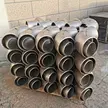
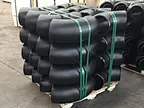


Titanium Tee
Type: Equal Tee, Reducing Tee, positive tee, inclined tee, threaded tee, clip tee, socket tee
Material: Pure titanium or Titanium alloy (Grade: GR.1/2/2H/7/12)
Specifications: Outer diameter DN10- 302/customizable
Wall thickness: 1-15MM Sch5s-Sch160
Titanium tees are common connecting components in industrial piping systems, available in various materials such as TA1, TA2, and TC4, and in specifications ranging from DN25 to large diameters. They are widely used in sectors including the chemical industry, aerospace, and seawater desalination, with suppliers across China offering custom fabrication and wholesale options.
Key Applications:
Thanks to their corrosion resistance, high strength, and low density, titanium tees operate reliably in various harsh environments and serve as core components for pipeline branching connections.
1.Chemical and Petroleum Industries: Titanium alloy tees Used for transporting corrosive media—such as acidic and alkaline solutions and petrochemical products—offering resistance to intergranular corrosion.
2.Marine Engineering: Titanium tees Suitable for seawater desalination, marine aquaculture, and offshore oil drilling pipelines, demonstrating superior resistance to seawater corrosion.
3.High-End Manufacturing: Titanium alloy tees Commonly found in aerospace, shipbuilding, and the power industry; also utilized in medical devices and food processing equipment.
Specifications:
When selecting, match the material to the operating pressure and medium characteristics, and verify that the pipe diameter meets the piping system requirements.
1.Common Material Grades:
TA1/TA2 (Commercially Pure Titanium): Good corrosion resistance; suitable for general chemical and seawater environments.
TC4 (Titanium Alloy): Higher strength; commonly used in aerospace or high-pressure applications.
TA10 (Titanium-Palladium Alloy): Superior resistance to reducing acid corrosion; suitable for specialized chemical processing conditions.
2.Specification and Size Range:
Small Diameter (DN25–DN100): Typically produced via cold extrusion or machining; wall thickness usually ranges from 1 mm to 8 mm.
Large Diameter (Above DN50): Often produced via hot forming; sizes can reach DN1200 or larger, with wall thicknesses up to 20 mm.
3.Connection Types: Categorized into equal tees (all three ports have the same diameter) and reducing tees (branch pipe diameter differs from the main pipe diameter); butt welding is the most common connection method.