


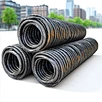
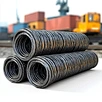
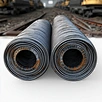
Titanium Spiral Pipe
Outer Diameter: 4-168mm
Length: MAX18000mm
Standard: ASTM B337 ASTM B338 B861 B862
Technique: Seamless
Wall Thickness: 0.5—10mm
Titanium spiral tube is a helical component fabricated from pure titanium or titanium alloy tubing. Titanium spiral tube combines the superior physicochemical properties of titanium with the high-efficiency mechanical and thermal design of a spiral structure, making titanium spiral tube widely applicable in industrial, chemical, and medical fields.
Key Characteristics
·Superior Corrosion Resistance: Highly resistant to rust and corrosion in seawater, strong acids, strong alkalis, and oxidizing atmospheres; titanium spiral tube service life far exceeds that of traditional copper or stainless steel tubes.
·Lightweight and High Strength: Density is only 57% that of steel (approx. 4.51 g/cm³), yet titanium spiral tube offers strength (specific strength) comparable to steel, resulting in a lightweight structure.
·Excellent Heat Exchange Efficiency: The spiral coil structure increases the effective heat transfer area, making it ideal for use as a heating or cooling element.
·Non-toxic and Eco-friendly: Chemically extremely stable, non-toxic, and harmless; titanium spiral tube does not leach heavy metals and is safe for human contact.
Common Applications
·Heat Exchangers and Condensers: Used in seawater desalination, marine air conditioning systems, and chemical cooling systems.
·Electric Heating Elements: Widely used in electroplating equipment, aquaculture temperature control units, and titanium electric heating rods.
·Medical and Food Industries: Due to high biocompatibility, titanium spiral tube is used for cooling medical devices or as piping for food-grade fluid transport.
Main Specifications and Fabrication
·Common Materials: Commercially pure titanium (e.g., TA1, TA2 / ASTM Grade 1, Grade 2) and titanium alloys.
·Forming Process: Typically formed using winding or rotary bending methods; parameters such as pitch, coil diameter, and tube diameter (ranging from capillary to large-bore tubes) can be customized to specific needs.
·Configurations: In addition to continuous spiral coils, they are often fabricated into shapes such as"U-tubes"to fit specific equipment spatial constraints.