


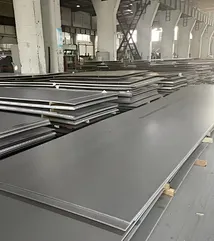

Titanium Plate Sheet
Grade: GR.1, GR.2, GR.3, GR.4, GR.5, GR.7, GR.12, GR.23, Ti-6AL-4V.
Specification: ASTM B265, AMS4911, AMS4900, AMS4901, AMS4902, MIL-T9046
Tolerance: acc. to specification requirement, industry standard and customized.
Flatness: 3mm per square meter
Titanium plates are non-ferrous metal sheets composed primarily of titanium. They are manufactured in compliance with Chinese national standards (such as GB/T 3621-2007 and GB/T 13810-2007) and international standards (such as ASTM B265 and ASTM F136), covering domestic grades (TA, TB, TC series) as well as American (GR series) and Russian (BT series) grades. The manufacturing process involves steps such as hot forging, hot rolling, cold rolling, and annealing, resulting in products available in hot-worked, cold-worked, and annealed states. Thanks to the properties of their surface oxide film, these titanium plates are widely used in electrolytic copper production; Titanium alloy plates serve as a substitute for traditional release agents, offer a service life three times longer than that of copper starter sheets, improve the crystallization quality of the electrolytic copper, and reduce production costs.
Feature:
1. The surface oxide film on titanium alloy sheets acts as an effective, durable release agent; their use eliminates the need for separate release agents and pre-treatment processes, facilitates easy stripping of the cathode plates, and reduces weight by half compared to copper starter sheets.
2. Titanium alloy sheets have a service life more than three times that of copper starter sheets, lasting between 10 and 20 years depending on operating conditions.
3. Electrolytic copper produced using titanium alloy sheets features a dense crystalline structure, a smooth, flat surface, and superior quality.
4. Since no release agent needs to be applied, contamination of the copper electrolyte is avoided.
5. Productivity is increased and production costs for electrolytic copper are reduced, resulting in significant economic benefits.