


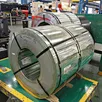
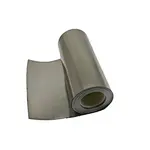
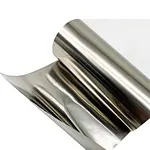

Titanium Foil
Titanium Type: Commercially Pure(CP) / Titanium alloy
Grade: Gr1 Gr2 Gr3 Gr4 Gr5 Gr6
Thickness: 0.025-75mm
Titanium Foil
Standard: ASTM B265 / ASME SB265/ AMS 4911 /ASTM F67 / ASTM F136/ISO 5832-2 / ISO 5832-3
Titanium Type: Commercially Pure(CP) / Titanium alloy
Grade: Gr1 Gr2 Gr3 Gr4 Gr5 Gr6
Thickness: 0.025-75mm
Titanium foil refers to titanium plate, strip, coil, or sheet material with a thickness of 0.1 mm or less; thickness may also be specified in terms of weight per unit area (e.g., g/m² or oz/ft²), where a higher value indicates greater thickness. Relevant international standards include China's GB/T 3622-2012 [1] and the US standard ASTM B265-2015.
Titanium foil features low density (4.51 g/cm³), a tensile strength of 380–450 MPa, corrosion resistance (specifically regarding annual corrosion rates in seawater), and temperature resistance (450°C to 500°C); it is processed using a 20-high cold rolling mill, requiring high-finish rolls and specific lubrication conditions. The core manufacturing process involves hot rolling of ingots, warm rolling to remove the oxide layer, and cold rolling to reduce the thickness to below 0.1 mm, followed by performance enhancement via vacuum annealing or continuous in-line protective annealing. The product width is ≤600 mm (with the maximum width determined by the roll body length), and the thickness tolerance can be controlled to within ±0.5 μm; applications include aerospace thermal insulation materials, hydrogen fuel cell bipolar plates, electronic heat sinks, and medical implant devices.