


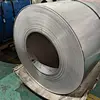
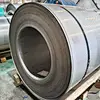
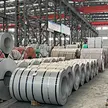


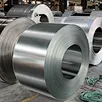


Titanium Coil
Grade: Gr1 Gr2 Gr3 Gr4 Gr5
Thickness: 0.025-75mm
Length: Cut according to the request
Technique: Hot rolled or cold rolled
Titanium coils are heat exchange or fluid transfer components manufactured from pure titanium or titanium alloy tubing using processes such as cold bending and spiral winding. Their core advantage lies in exceptional corrosion resistance, making them particularly suitable for seawater, chloride-rich environments, and conditions involving strong acids or alkalis.
Key Characteristics and Advantages
1.Superior Corrosion Resistance: A dense oxide film forms on the surface, resulting in virtually no corrosion in seawater, hypochlorite, or acidic fluids; the service life far exceeds that of copper, aluminum, or stainless steel.
2.High Strength-to-Weight Ratio: Low density combined with high strength makes them ideal for weight-sensitive mobile equipment or high-altitude installations.
3.Biocompatibility: Medical-grade titanium is non-toxic and non-magnetic, suitable for use in medical implant auxiliary coils or MRI-compatible environments.
4.Heat Exchange Efficiency: Although thermal conductivity is slightly lower than that of copper, designs utilizing micro-channels or increased surface area can compensate for this efficiency gap and reduce refrigerant charge requirements.
Common Material Grades
1.Grade 1/2 (Pure Titanium): Most commonly used; Grade 2 offers a balance of strength and corrosion resistance, making it the preferred choice for pool heaters, desalination systems, and chemical heat exchangers.
2.Grade 7 (Palladium-enhanced): Contains trace amounts of palladium, significantly enhancing corrosion resistance in reducing acids (such as dilute sulfuric acid and hydrochloric acid); used in extreme chemical processing environments.
3.Grade 5 (Ti-6Al-4V): A high-strength titanium alloy used in high-pressure, high-stress applications (e.g., aerospace cooling systems), though it is more difficult to weld and form.
4.Grade 12 (Molybdenum and Nickel-enhanced): Performs exceptionally well in high-temperature and high-velocity flow/erosion environments.
Primary Application Scenarios
1.HVAC and Refrigeration: Seawater-source heat pump condensers, air conditioning units in coastal areas, and swimming pool heaters (resistant to chlorine corrosion).
2.Industrial Processes: Electroplating bath heating/cooling, hydrometallurgy, and high-purity fluid transfer in the pharmaceutical industry.